Heya! I'm Callum, a PhD candidate at the University of Cambridge. I work with the planetary chemistry research group at the Institute of Astronomy, exploring the conditions that make planets habitable and how life might arise in such environments. I aim to push the boundaries of our understanding of where and how life could exist beyond Earth, searching for clues that could answer one of humanity's most profound questions: Are we alone in the universe?
Callum Madeley
Institute of Astronomy
Madingley Road, Cambridge
CB3 0HA
cjm267@cam.ac.uk
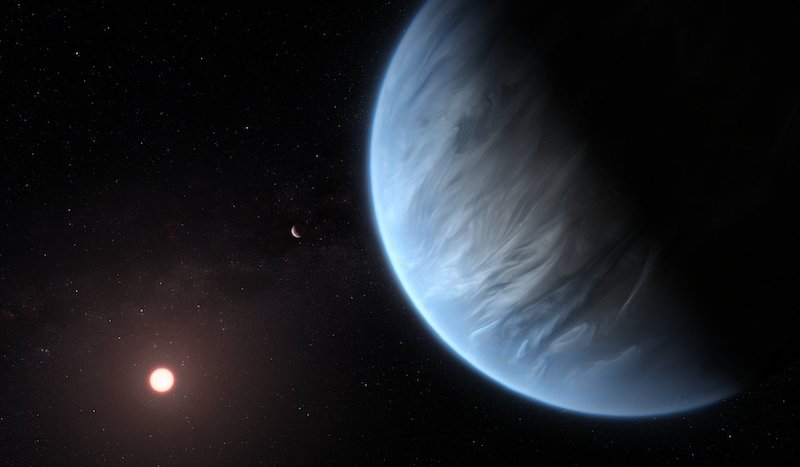
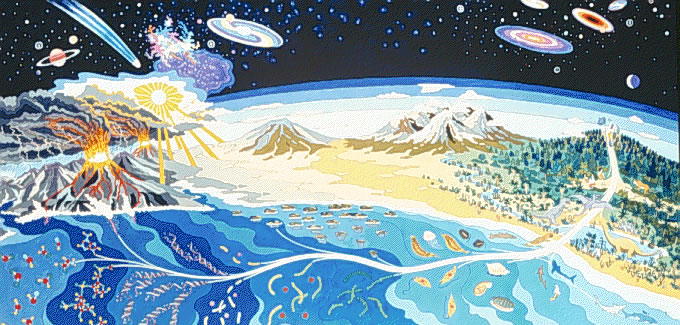
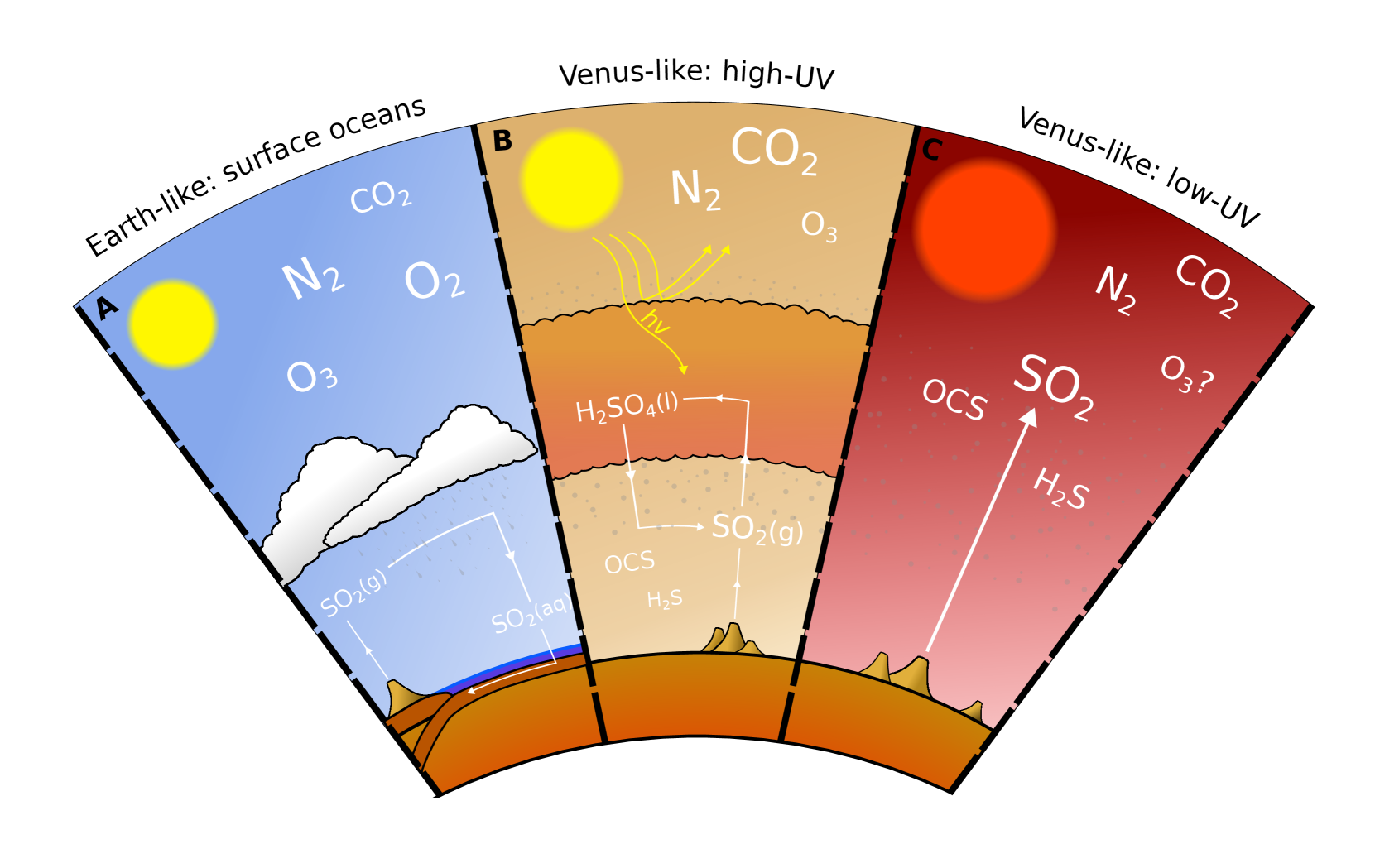
The first step in the search for life in the Universe is to determine the conditions required to form a planet capable of hosting life. The planet's climate must be stable over geological timescales, providing a cradle for life to originate and evolve over potentially billions of years. This is achieved through a complex interplay between a planet's interior, surface, and atmosphere. We must explore topics of atmospheric evolution, geochemical cycles, volcanism, stellar activity, planetary dynamics, and more to understand how habitable worlds form and persist.
Upon finding a habitable planet, the next step is to determine whether life could have originated there. This is a difficult question. Our inability to define origin of life scenarios in chemically testable terms is one on the major roadblocks in our understanding of the emergence of life. There are many factors in favour of life - an early emergence on Earth, the existence of extremophiles, and the ubiquity of life's building blocks in the Universe. Obviously, life can occur - you're reading this, after all! But how likely is it to arise on a habitable planet? Given the "right" conditions, is life inevitable?